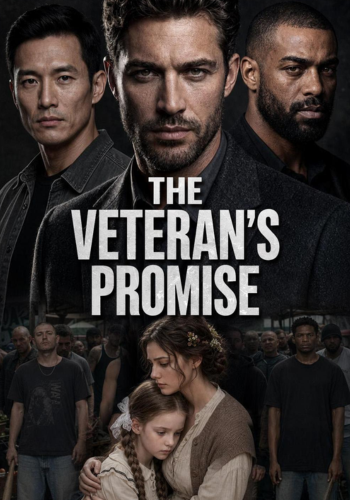

Nine years old, alone, and holding her dead father's last gift
Advertisements
One phone call wakes a debt that two hundred soldiers never forgot
Some debts cannot be paid in money, and Jack Holt has spent his civilian life trying anyway. The Marine veteran returned from war and poured everything into Ridgeline Farm Supply, a company whose real product is dignity: two hundred disabled veterans, the men who served alongside him, draw their livelihoods from the business he willed into existence. Ridgeline is Jack's answer to the question of what soldiers owe each other after the shooting stops. Yet one name on his ledger never balances. Sam Russo saved the entire squad in Helmand, shoving his brothers clear of an IED and leaving his leg in the dirt, and no paycheck ever invented could settle that account.
Sam's death moves the debt to his survivors. He leaves behind a wife, Maria, and a nine-year-old daughter, Sofia, and he leaves them in a world that does not honor sacrifice the way soldiers do. Circling that vulnerability is Derek Malone, a market boss who reads a grieving widow as an acquisition, a man for whom the absence of a husband is simply an opening. His campaign against Maria is ugly and public, her produce stand destroyed, threats delivered while her daughter clings to her, cruelty performed with the smirk of someone certain no one is coming.
Sam knew someone would come. His entire estate, the only inheritance he could guarantee, was a phone number pressed into his daughter's keeping, sealed with a promise: whoever answers will come. The series builds its emotional foundation on the image of Sofia, muddy and desperate, finally dialing those digits. On the other end, Jack Holt nearly dismisses the call as a scam, a child's voice asking for help from a number he does not recognize. The audience knows what he does not, and that gap between his confusion and the truth gives the scene its charge. Then understanding lands, and the promise activates.
Answering the call proves to be the simple part. Derek Malone is only the visible half of the threat. Behind him stands his brother Connor, a tycoon whose reach covers half of Pittsburgh, and Connor fights the way rich men fight, bloodlessly and absolutely. Contracts vanish overnight. Ridgeline, the company holding up two hundred lives, is gutted in days. The series pushes Jack all the way to the bottom, stripped of his business, forced to beg, humiliated by an enemy no rifle can answer. The Malones dismantle a man methodically, believing they are erasing an isolated problem.
Their error is one of arithmetic. Jack was never one man. The brotherhood that Ridgeline embodied does not dissolve with its contracts, and the humiliation of a fallen soldier's widow, carried out in front of the very men who bled beside her husband, converts two hundred individual grievances into a single force. The mobilization the series builds toward is its answer to the tycoon's money: loyalty at scale, veterans who answer without hesitation, and the grim education of two powerful brothers who assumed wealth outranked brotherhood. The wrong family, as the story puts it, was chosen for a target.Some debts cannot be paid in money, and Jack Holt has spent his civilian life trying anyway. The Marine veteran returned from war and poured everything into Ridgeline Farm Supply, a company whose real product is dignity: two hundred disabled veterans, the men who served alongside him, draw their livelihoods from the business he willed into existence. Ridgeline is Jack's answer to the question of what soldiers owe each other after the shooting stops. Yet one name on his ledger never balances. Sam Russo saved the entire squad in Helmand, shoving his brothers clear of an IED and leaving his leg in the dirt, and no paycheck ever invented could settle that account.
Sam's death moves the debt to his survivors. He leaves behind a wife, Maria, and a nine-year-old daughter, Sofia, and he leaves them in a world that does not honor sacrifice the way soldiers do. Circling that vulnerability is Derek Malone, a market boss who reads a grieving widow as an acquisition, a man for whom the absence of a husband is simply an opening. His campaign against Maria is ugly and public, her produce stand destroyed, threats delivered while her daughter clings to her, cruelty performed with the smirk of someone certain no one is coming.
Sam knew someone would come. His entire estate, the only inheritance he could guarantee, was a phone number pressed into his daughter's keeping, sealed with a promise: whoever answers will come. The series builds its emotional foundation on the image of Sofia, muddy and desperate, finally dialing those digits. On the other end, Jack Holt nearly dismisses the call as a scam, a child's voice asking for help from a number he does not recognize. The audience knows what he does not, and that gap between his confusion and the truth gives the scene its charge. Then understanding lands, and the promise activates.
Answering the call proves to be the simple part. Derek Malone is only the visible half of the threat. Behind him stands his brother Connor, a tycoon whose reach covers half of Pittsburgh, and Connor fights the way rich men fight, bloodlessly and absolutely. Contracts vanish overnight. Ridgeline, the company holding up two hundred lives, is gutted in days. The series pushes Jack all the way to the bottom, stripped of his business, forced to beg, humiliated by an enemy no rifle can answer. The Malones dismantle a man methodically, believing they are erasing an isolated problem.
Their error is one of arithmetic. Jack was never one man. The brotherhood that Ridgeline embodied does not dissolve with its contracts, and the humiliation of a fallen soldier's widow, carried out in front of the very men who bled beside her husband, converts two hundred individual grievances into a single force. The mobilization the series builds toward is its answer to the tycoon's money: loyalty at scale, veterans who answer without hesitation, and the grim education of two powerful brothers who assumed wealth outranked brotherhood. The wrong family, as the story puts it, was chosen for a target.
NetShort delivers the tale across 58 vertical episodes in its established rhythm, every installment deepening the injustice or accelerating the reckoning before cutting on a hook. The premise fuses the format's beloved underdog architecture with a patriotic core and a child's plea that gives the machinery a heartbeat. Viewers who want their revenge arcs built on genuine sacrifice, and their villains educated by consequences money cannot deflect, will find this series aimed directly at them.
Diana Foster is an entertainment writer specializing in action-romance hybrids and digital platform storytelling. With a background in genre fiction analysis, she covers the growing intersection of adrenaline-driven plots and romantic arcs in short-form series. Her reviews focus on pacing, production value, and what makes mobile-first content irresistible to global audiences.
The following review exists purely for informational and entertainment purposes. Every intellectual property right associated with The Veteran's Promise, including copyright, trademarks, and worldwide distribution rights, belongs entirely to the original creators, the production company, and the NetShort platform. This site asserts no affiliation with or ownership of that content. Audiences wishing to watch the complete series should do so through NetShort's official app or website, which remains the only legitimate channel through which the cast, writers, and production team receive proper recognition and fair compensation for their work. This site functions strictly as an editorial review and recommendation space for followers of the vertical drama format. Everything published here, reviews, articles, and recommendations alike, is available at no cost. We never charge fees, never request payment information, and never place our writing behind any form of paywall. We do not host, stream, or redistribute protected material under any circumstances. Our single goal is to help viewers discover dramas worth their time through honest and considered criticism. To watch The Veteran's Promise in full and to support the people who created it, please visit NetShort's official website or application.