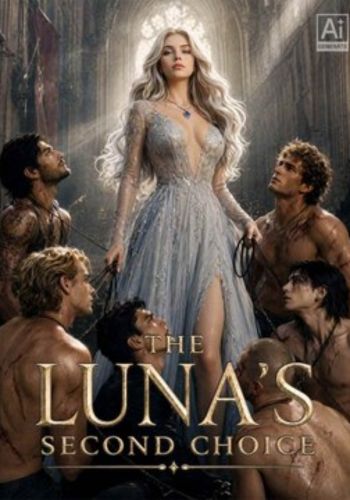

An orphan heir, five betrayals, and one door she refuses to leave open
Advertisements
The Lycan Prince arrives after she stops waiting, not before
Elara Turner's backstory begins not with a birthday or a first kiss but with blood. Years before the opening episode, she used her own blood to pull Alpha Mason Turner back from the edge of death. That act of healing, striking in a girl barely old enough to understand its cost, became the foundation of everything that followed. Mason adopted her into the Stormfang Pack, raising her alongside his five sons with the understanding that she would one day choose one of them as her mate. On paper, this looked like gratitude. In practice, it functioned as a cage dressed in silk.
The arrangement held until a maid named Jenny arrived at the Stormfang estate. Jenny is officially classified as an omega, the lowest rank in the pack's social structure, which is precisely what makes her effective. She is not a rival Alpha arriving with raw power and open challenge. She works from below, reading the five brothers' individual insecurities with surgical precision and positioning herself as the victim of every conflict she engineers. When Ethan's arrow accidentally strikes Jenny during a hunt, the brothers' collective instinct shifts in a single afternoon. From that point on, they attend to Jenny's demands while leaving Elara without medical care, stripped of the status she was promised and framed for every inconvenience that Jenny manufactures.
The humiliations accumulate with a specificity that prevents them from reading as simple genre cruelty. The brothers force Elara to perform acts of servitude on Jenny's behalf. They dismiss her testimony when Jenny stages incidents. In one episode, Ethan physically blocks Elara from purchasing a wedding dress so that Jenny can claim it instead. These are not dramatic villains twisting their metaphorical mustaches. They are men who hold every structural advantage in this world and have simply never been required to see clearly, because nothing in their upbringing demanded it of them.
What the series understands, and what elevates it past its premise, is the psychological distinction between what Elara was promised and what she actually deserved. She was told she had a place inside the Stormfang Pack. The five brothers were that promise made flesh. When they turned away, she didn't lose romantic possibilities. She lost evidence that she belonged anywhere at all. The weight of that particular grief, quiet and cumulative rather than operatic, gives Elara a psychological texture that most series in this format sacrifice in favor of faster pacing.
The hinge of the entire drama arrives on her eighteenth birthday. The genre convention would position this as the moment a more powerful force arrives to rescue her, the scene where someone else writes her future. Instead, Elara speaks first. She publicly rejects the mate bond with all five brothers before they can continue to use it against her, then announces her engagement to Lycan Prince Xavier Lockhart. The moment reads less as wish-fulfillment and more as self-preservation that has finally outgrown its own patience. Xavier is already there, already chosen, but the choice belongs entirely to her.
Xavier's function in the story is architecturally deliberate. He does not appear early. He does not swoop in to rescue Elara from the worst of what the Stormfang brothers put her through. He arrives after she has already done the internal work of choosing herself, which means their connection cannot be read as a woman trading one form of dependency for another. His own affliction, a deadly curse bound to his bloodline that Elara's healing ability ultimately breaks, creates a structural mirror between the two of them: two people carrying damage they did not choose, both shaped by systems that had no room for who they actually were.
For viewers who have watched this format long enough to anticipate every beat, The Luna's Second Choice earns its position in the crowded werewolf drama space by refusing two of the genre's most common exits. The brothers do eventually uncover Jenny's deception. They do experience genuine regret. The drama then declines to reward that regret with reconciliation, letting their epiphany arrive at precisely the moment it can no longer change anything. That refusal is the sharpest creative decision in the series, and it is the one that will stay with viewers after the final episode ends.
Rachel Monroe is a drama critic with deep expertise in Korean and Chinese productions. She brings a screenwriter's eye to her analysis, breaking down story structure, dialogue, and the emotional beats that make K-Drama and C-Drama so compelling. Her work helps Western audiences navigate and appreciate Asian storytelling traditions.
The content presented here is intended solely for informational and critical review purposes. All rights pertaining to The Luna's Second Choice, including copyright, trademark protections, and content distribution rights, remain the exclusive property of the original creators, production team, and the ReelShort platform. Viewers interested in watching the complete series are encouraged to do so through ReelShort's official app or website, where the creative team receives proper recognition and compensation for their work. This site functions exclusively as a criticism and recommendation platform for fans of the short drama format. All reviews, editorial commentary, and discovery content published here are made available to readers at no charge. We do not collect payment, request credit card details, or restrict access to our editorial content behind any paywall. We do not host, stream, or redistribute any copyrighted material in any form. Our purpose is to help drama enthusiasts find productions worth their time through honest critical perspective. To watch The Luna's Second Choice in full and support the people who made it, please visit ReelShort's official platform directly.