
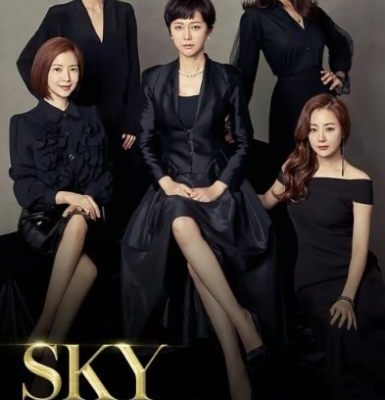
What’s the obsession with academic perfection, anyway? Enter SKY Castle, a drama that took Netflix by storm and became a sensational critique of South Korea’s cutthroat education landscape and class struggles. This series does more than entertain; it holds a mirror to society, reflecting the absurd lengths parents go to for success.
Advertisements
Debuting on JTBC on November 23, 2018, and wrapping up on February 1, 2019, SKY Castle graced our screens for 20 gripping episodes, each clocking in at about 75 minutes. With its sharp social commentary and a talented ensemble cast, the show quickly garnered international fame, proving that drama can indeed spark conversation.
Set within the lavish confines of a high-end residential complex, this series peels back the layers of South Korea’s relentless educational race. The narrative artfully weaves thriller elements with biting satire, exposing the toxic obsession with academic achievement fostered by wealthy families—where parental ambition isn’t just a drive but a relentless quest for status.
At the heart of the story are four affluent families navigating the treacherous waters of societal expectations and academic pressure. In their eyes, elite universities are not just a goal; they’re the golden ticket to prestige, leading to buried truths, cunning manipulation, and outcomes that are anything but rosy.
The Cost of Chasing Dreams
In this exclusive enclave, the stakes are sky-high. Meet Han Seo Jin, Noh Seung Hye, Jin Jin Hee, and Lee Myung Joo—parents whose aspirations for their children’s success turn into a dark obsession. The series uncovers the materialistic tendencies of these elite parents, unmasking the lengths they will go to in their quest for academic excellence. Enter a mysterious tutor promising guaranteed entry to Seoul National University’s medical program, and you have a recipe for escalating tensions and moral decay.
Han Seo-jin (Yum Jung-ah) – The Ultimate Stage Mom
Yum Jung-ah shines in her role as Han Seo-jin, a character who embodies the archetype of the ambitious ‘tiger mother.’ As she fixates on her twin daughters’ academic fortunes, her evolution into a morally flexible parent is both fascinating and horrifying. She encapsulates the relentless pursuit of success and the chaos it breeds, making her a riveting protagonist who oscillates between admiration and disdain.
Her journey from a relatively normal parent to a woman who compromises her values is a stark reminder of the perils of unbridled ambition. Jung-ah’s performance is a masterclass in complexity, as she navigates the thin line between protective instincts and destructive behaviors, earning her a place among the most compelling characters in Korean drama.
Kang Joon-sang (Jung Joon-ho) – The Torn Patriarch
Portrayed by Jung Joon-ho, Kang Joon-sang stands as a moral compass amidst the chaos. As a successful orthopedic surgeon, he grapples with the burden of his family’s expectations and the dark secrets from his past that threaten to unravel their seemingly perfect life. His internal conflict resonates deeply as he wrestles with the extreme measures taken by those around him in pursuit of academic success.
Joon-ho’s performance captures the essence of a man in crisis, torn between familial loyalty and the chilling realization of what their ambitions are costing them. His transformation from a passive bystander to a participant in the community’s toxic behaviors adds layers to the narrative, particularly as his own secrets come to light.
When Truths Come Crashing Down
The tension escalates to a breaking point as the immense pressure placed on the kids leads to unforeseen tragedies. Families are forced to confront the grim realities of their obsessive pursuits, with buried secrets surfacing and a mysterious newcomer threatening to unveil harsh truths, creating a perfect storm of conflict.
The climax doesn’t shy away from illustrating the psychological toll the characters endure, prompting viewers to question whether the pursuit of academic prestige is worth the collateral damage to mental health and familial bonds. This narrative arc delivers a resounding message about the critical need for balance in education and parenting.
A Tangle of Aspirations and Deceit
The ensemble cast, featuring talents like Lee Tae-ran as Jin Jin-hee and Choi Won-young as Hwang Chi-young, crafts a rich narrative tapestry. Each family brings a unique perspective on South Korea’s educational culture, from nouveau riche striving for acceptance to old-money elites clinging to their status.
The youth, particularly Kim Hye-yoon as Kang Ye-seo and Kim Bo-ra as Kim Hye-na, deliver poignant performances that encapsulate the heart-wrenching pressure faced by teenagers. Their experiences highlight the emotional toll of their parents’ relentless ambitions, anchoring the series’ social critique in deeply human stories.
A Netflix Sensation
With a record-breaking highest rating of 23.779%, SKY Castle smashed records to become one of the highest-rated dramas in cable history, starting from a modest 1.8% viewership on its premiere. Critics showered it with accolades, securing multiple awards, including four at the 55th Baeksang Arts Awards. Now streaming on Netflix, the drama continues to captivate global viewers with its unflinching portrayal of educational pressures and class disparities, resonating with anyone familiar with similar societal issues.
For fans of sharp social critiques, psychological thrillers, and dramas that challenge the status quo, SKY Castle is a binge-worthy experience. It’s a thought-provoking journey that forces us to reconsider what success truly means and the steep price we often pay for it.
Final Thoughts
This series is a haunting exploration of ambition and social climbing that leaves a lasting impact, reminding us that some victories may not be worth the sacrifice.
Series Overview:
Number of Episodes: 20
Platform: Netflix
Rating: 8.5/10 (IMDb)
Genre: Drama, Mystery, Thriller, Social Satire
Main Cast: Yum Jung-ah (Han Seo-jin), Jung Joon-ho (Kang Joon-sang), Lee Tae-ran (Jin Jin-hee), Choi Won-young (Hwang Chi-young)
Antagonist: The toxic education system and societal pressures (not a single villain, but a systemic critique)