
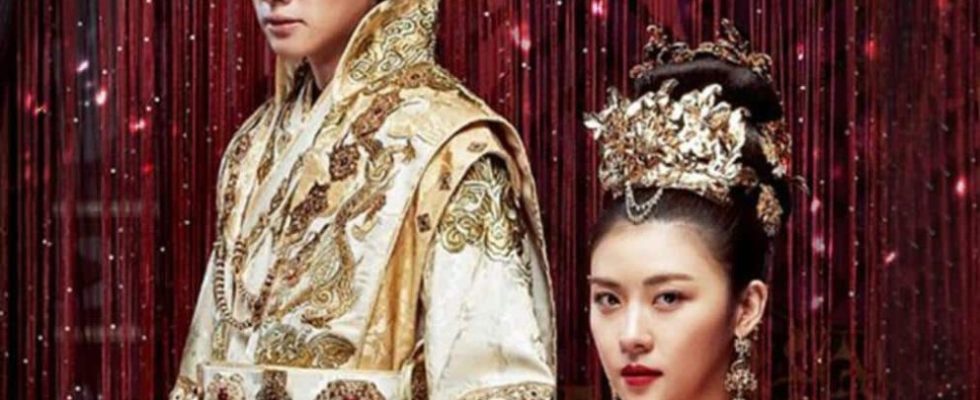
Greetings! Today, I delve into the captivating drama Empress Ki, a monumental K-drama that chronicles the remarkable journey of a Korean woman who ascended to the position of the most formidable empress in China.
Advertisements
Empress Ki aired between October 28, 2013, and April 29, 2014, encompassing 51 episodes, each approximately 60 minutes in length, presented on MBC every Monday and Tuesday. Now available on Netflix, the series narrates the story of Ki Seung-nyang, a woman born in Goryeo who rises to prominence despite the stringent class restrictions of her time, ultimately marrying Toghon Temür and becoming the Empress of the Yuan Dynasty.
What sets this drama apart is its grand narrative scope and historical depth, traversing decades of political machinations, warfare, and romance across two nations. The series adeptly explores the intricacies of power, loyalty, and survival in an environment where dynasties rise and fall, creating a superb blend of personal narratives with expansive political themes.
The Journey of Ki Seung-nyang: From Exile to Sovereign
Ki Seung-nyang (Ha Ji-won) starts as a young woman disguised as a man, forced to navigate a world that offers limited opportunities for women. Her metamorphosis from a desperate fugitive to the most powerful female figure in the Yuan Dynasty is truly remarkable. Ha Ji-won’s performance is nothing short of a career highlight, showcasing Seung-nyang’s intelligence, determination, and political savvy as she maneuvers through the perilous landscape of imperial court politics.
Seung-nyang’s character arc throughout Empress Ki exemplifies how challenging circumstances can shape an ordinary person into a historical icon. Her journey vividly illustrates the sacrifices and costs associated with power in a world where displaying vulnerability can lead to fatal consequences.
The Two Kings Entwined in Her Fate
Wang Yoo (Joo Jin-mo) embodies Seung-nyang’s first love and her bond to her homeland, Goryeo. As the king of Goryeo, his relationship with Seung-nyang is steeped in shared history and genuine love, yet complicated by the demands of political duty. Joo Jin-mo imbues his character with a profound sense of conflict between personal happiness and royal responsibility.
Conversely, Ta Hwan (Ji Chang-wook) initially appears as a fragile Yuan emperor but evolves into a nuanced ruler whose infatuation with Seung-nyang alters both their fates. Ji Chang-wook’s portrayal reveals how love can serve as both an elevating force and a destructive one, influencing Ta Hwan’s reign and eventual demise.
A Triangular Conflict of Love and Power
At the heart of Empress Ki lies a compelling love triangle involving Seung-nyang and the two kings. This narrative arc transcends mere romantic choice; it delves into themes of loyalty, survival, and the intersection of individual desires with historical forces. The series adeptly explores how love can become both a pillar of strength and a perilous vulnerability in the political arena.
These relationships propel the political dynamics forward, illustrating how personal feelings can yield far-reaching impacts on nations and their people.
When Empires Collide and Hearts Shatter
The series reaches its peak emotional intensity when personal connections clash with political realities, compelling heart-wrenching decisions between love and duty, honor and survival. The climactic episodes reveal the actual price of power as Seung-nyang faces the daunting choice between the two men she loves amidst the disintegration of empires. These pivotal moments underscore the idea that Empress Ki recognizes the most devastating battles are often fought within the heart rather than on the battlefield.
The series’ treatment of its tragic elements elevates it beyond a conventional historical drama to a genuinely memorable and emotionally impactful experience.
A Triumph on Global Platforms
Empress Ki achieved remarkable success both domestically and internationally, earning the Golden Bird Prize for Serial Drama at the 9th Seoul International Drama Awards. Ha Ji-won garnered the Grand Prize at the MBC Drama Awards for her powerful portrayal. The series’ availability on Netflix introduced a global audience to the grand scale achievable in K-dramas, establishing a new benchmark for historical storytelling. Empress Ki incited interest in Korean history and the Yuan Dynasty, demonstrating that viewers seek intricate, well-conceived historical narratives featuring strong female leads.
A Grand Saga of Unparalleled Ambition
For those who appreciate narratives centered on formidable women, epic historical drama, and intricate political intrigue, Empress Ki is an essential series to watch on Netflix. While it demands viewer commitment, it rewards with one of the most satisfying and profoundly emotional historical tales ever crafted.
A Masterpiece of Historical Drama
Across its 51 episodes, the series illustrates how a woman’s resolve and intellect can alter the course of history, albeit at a significant personal cost. Empress Ki exemplifies that the finest historical dramas go beyond mere historical recreation, probing timeless themes of power, love, and human ambition that resonate through the ages.
Series Overview
Episode Count: 51 (Completed)
Available On: Netflix
Release Period: 2013-2014
IMDb Rating: 8.4/10
Genres: Historical Drama, Romance, Political
Status: Completed
Main Cast: Ha Ji-won (Ki Seung-nyang), Ji Chang-wook (Ta Hwan), Joo Jin-mo (Wang Yoo)
Key Challenges: Political corruption, court intrigues, and the stark realities of imperial dominion.