
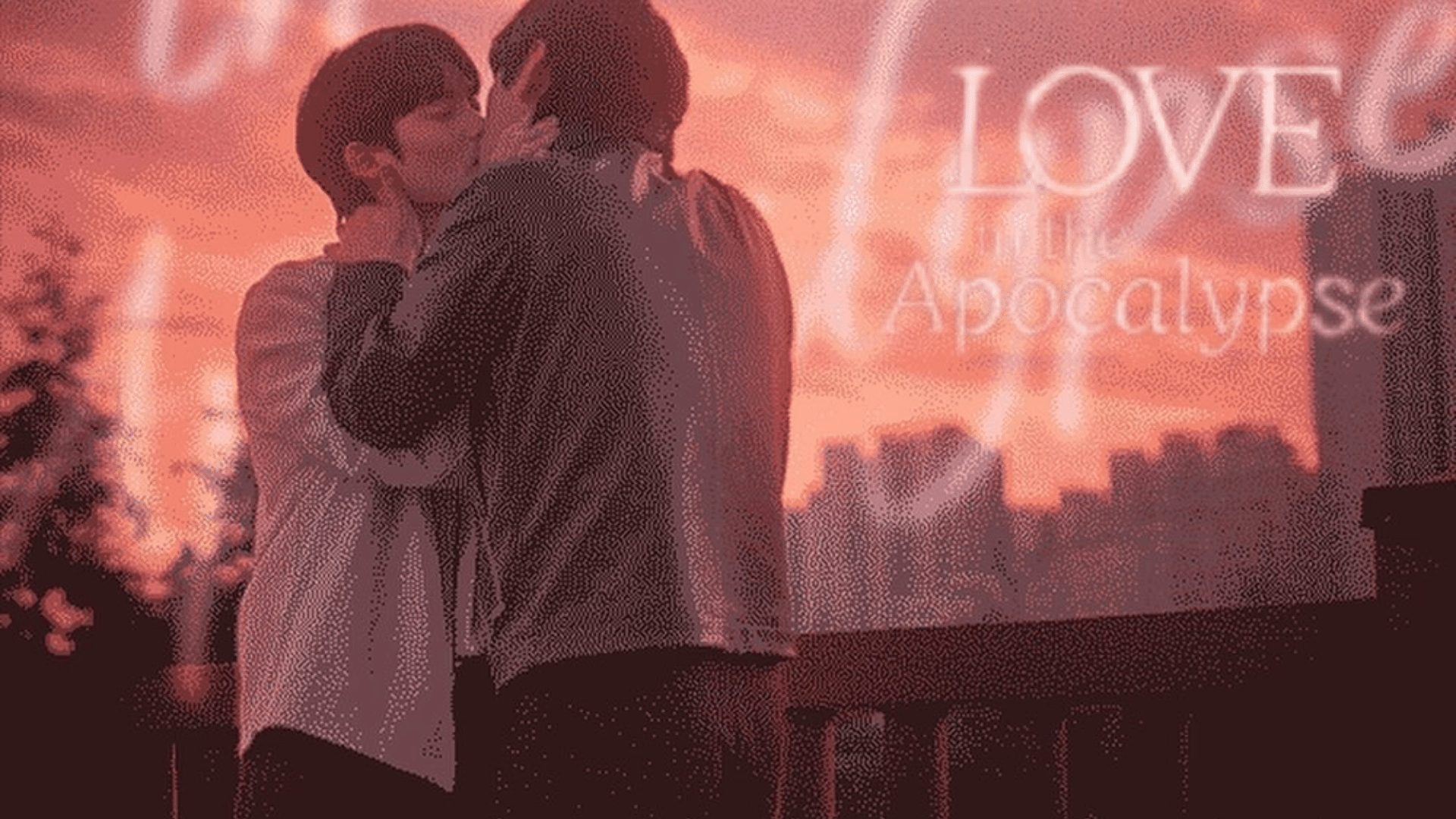
Romance Amid the End Times: Exploring Love and Human Bonds in a World on the Brink
“Romance Amid the End Times” stands out as an audacious entry in the realm of Korean BL dramas, merging apocalyptic science fiction with queer love in a distinctive and heartfelt manner. The series delves into a significant existential inquiry: how do we choose to live when we are aware that the end is approaching? More importantly, how can love thrive even in dire situations?
Advertisements
Storyline and Unique Concept
The narrative is set in a scenario where a meteor named “Love” is predicted to crash into Earth within a week, carrying a 99.2% chance of annihilating the world. This apocalyptic backdrop acts as a trigger for a deep examination of what truly matters to humanity, the quest for personal truth, and the life-altering force of authentic love.
Heesu, the main character, finds himself at a pivotal moment in his life: with the world facing imminent destruction, he resolves to embrace honesty concerning his sexuality. This realization is integral to his journey of self-acceptance and meaningful connection with Woojin, his boss at work, rather than being a mere subplot.
Character Growth and Romantic Interactions
Heesu embodies the archetype of an individual who requires an impending disaster to muster the bravery to live truthfully. His choice to come out to his family and pursue his feelings for Woojin signifies an emotional emancipation that resonates deeply with many queer viewers.
Contrastingly, Woojin is portrayed as an intense workaholic, continuing his tasks despite the looming apocalypse. While this initial portrayal may appear exaggerated, it effectively illustrates how some individuals cope with existential crises through denial and relentless routines. His character arc, learning to “live” under Heesu’s influence, offers a poignant emotional journey.
The relationship between the two characters navigates themes of vulnerability, closeness, and the bravery required to connect genuinely with another person when time is scarce. This sense of urgency heightens the emotional weight of each interaction, transforming simple exchanges into moments of deep significance.
“Romance Amid the End Times” is presented in a micro-episode format, comprising 40 episodes of roughly 2 minutes each, resulting in around 75 minutes of viewing time. This vertical presentation, designed for mobile consumption, reflects a contemporary approach to content delivery, though it imposes constraints on complex narrative exploration.
The decision to use a vertical filming style sparked debate among viewers, many of whom found the format less comfortable for traditional viewing. Nevertheless, this choice acknowledges the shifts in media consumption patterns, particularly among younger audiences who favor mobile-first content.
The series transcends its concise structure to tackle urgent issues surrounding mortality, authenticity, and priorities in life. The apocalyptic theme serves as a potent metaphor for personal crises that compel individuals to confront self-truths they would typically evade.
Examining the queer experience through an apocalyptic lens adds depth to the narrative: “coming out” in the context of the world’s end signifies both urgency and liberation from societal constraints that often stifle genuine expression. This narrative approach particularly resonates with LGBTQ+ viewers who understand the courage required for open living.
Narrative Strengths and Challenges
The series’ primary strength lies in its inventive concept and the authentic chemistry shared by the lead characters. The intimate moments between Heesu and Woojin manage to convey genuine emotion, despite the constraints of time and format.
However, the series encounters notable challenges in character development due to its limited runtime. Woojin, in particular, can sometimes appear more like a caricature than a fully fleshed-out character, with actions that stretch believability even within the apocalyptic scenario. The insufficient time to delve into psychological intricacies diminishes the potential emotional resonance of the story.
Critics have also pointed out plot developments that seem far-fetched and interactions that occasionally feel forced. The introduction of superfluous drama in some episodes detracts from the more compelling central narrative of the romantic relationship.
Production Quality and Technical Aspects
As a modestly budgeted Korean BL series, “Romance Amid the End Times” operates under clear resource and location constraints. The minimalist settings, notably the vacant office where Woojin continues to work, fulfill both budgetary and narrative needs, creating a sense of isolation that enhances the apocalyptic theme.
Despite these limitations, the direction succeeds in achieving effective visual moments, employing intimate framing and soft lighting to cultivate a romantic ambiance that contrasts sharply with the bleakness of the impending apocalypse.
Audience Reception and Cultural Significance
The series has garnered mixed reviews, with viewers split between those who appreciate its innovative premise and those who feel the execution is hampered by its format and budget limitations. The 7.3 rating on MyDramaList reflects this divide, indicating that while the content resonates with some audiences, it does not achieve widespread acclaim.
In the landscape of Korean BL dramas in 2024, “Romance Amid the End Times” represents an intriguing experiment with format and story, even if it doesn’t always succeed in its execution. Its contribution to the thematic diversification of the BL genre is noteworthy, moving beyond the conventional school or workplace settings.
Concluding Thoughts
“Romance Amid the End Times” is most effective as a conceptual exploration rather than a fully realized drama. Its inventive premise and genuine emotional moments provide glimpses of potential, but technical and narrative hurdles prevent it from reaching its full capabilities.
For those who enjoy experimental BL content and viewers intrigued by existential themes through a romantic perspective, the series offers a unique, albeit flawed, experience. Its brief runtime makes it easily digestible, allowing viewers to determine for themselves whether the innovative concept compensates for the shortcomings in execution.
The series marks an interesting progression in the evolution of Korean BL content, highlighting a readiness to experiment with unconventional formats and more ambitious themes, even when the resources do not allow for a completely polished execution.